 English
 German
 French
 Russian
 Spanish
 Japanese
 Korean
 Portuguese
 Ukrainian
 Arabic
 Italian
Key Technical Specifications to Compare When Selecting an Industrial Laser Cleaning Machine
Industrial laser cleaning has rapidly become a preferred method for rust removal, paint stripping, oil and oxide cleaning, and surface preparation across automotive, aerospace, mold manufacturing, shipbuilding, and many other industries. Compared with traditional mechanical or chemical cleaning, laser cleaning is precise, eco‑friendly, and often more cost‑effective in the long run. However, choosing the right industrial laser cleaning machine requires a clear understanding of key technical specifications.
Based on the product range and technology showcased on the SFX Laser website, this guide explains the critical technical parameters you should compare before purchasing a laser cleaning system.
1. Laser Type and Wavelength
The core of any industrial laser cleaning machine is the laser source. The most common types for cleaning applications include:
- Fiber lasers – The mainstream solution for industrial laser cleaning, typically operating at ~1064 nm (near‑infrared). Fiber lasers offer high efficiency, good beam quality, long lifetime, and low maintenance. Many SFX cleaning systems are fiber‑laser based.
- Solid‑state lasers – Used in some specialized systems, but generally less popular than fiber lasers for high‑productivity industrial cleaning.
Why wavelength matters:
- Most fiber laser cleaners operate at 1064 nm, which is well absorbed by rust, paint, and coatings while being relatively safe for many metal substrates when parameters are correctly set.
- Matching the laser wavelength to the absorption characteristics of the target contaminants helps maximize cleaning efficiency and minimize substrate damage.
2. Laser Power (Average Power)
Laser power is one of the first specifications you will notice when browsing industrial laser cleaners, such as the 100W, 200W, 500W, 1000W and higher‑power systems offered by SFX Laser. Average power directly affects cleaning speed and throughput.
Typical ranges and applications:
- Low to medium power (e.g., 100–300 W) – Suitable for precision cleaning, localized rust removal, delicate components, and light coatings.
- Medium to high power (e.g., 500–1000 W) – Designed for faster rust removal, thick paint stripping, and larger surface areas.
- High power (>1000 W) – Used in heavy industrial applications, ship hull cleaning, heavy equipment maintenance, and high‑volume production lines.
Key comparison point: Higher power does not simply mean “better”; it must be matched to your substrate, contamination type, and required cycle times. Excessive power on delicate parts may cause substrate damage or unnecessary expense.
3. Pulse Mode: Continuous Wave vs. Pulsed
Industrial laser cleaning systems are broadly categorized into:
- Continuous Wave (CW) lasers – Output is continuous over time. CW cleaning is effective for some large‑area or heavy contamination tasks but can introduce more heat into the substrate.
- Pulsed lasers – Output energy is delivered in short pulses. Pulsed fiber lasers are widely used in high‑quality cleaning due to their precise control, higher peak power, and lower heat input.
SFX Laser focuses heavily on pulsed fiber laser cleaning solutions, which are ideal for:
- Fine control of energy delivery to remove surface contaminants without damaging the base material.
- Applications requiring clean, oxide‑free surfaces for welding, bonding, or coating.
4. Pulse Energy and Pulse Width
For pulsed laser cleaning machines, pulse energy (measured in millijoules, mJ) and pulse width (measured in nanoseconds, ns, or microseconds, μs) are crucial parameters.
Pulse energy:
- Higher pulse energy delivers more energy per pulse to the surface, improving removal efficiency of rust, paint, and oxide layers.
- Excessive pulse energy on sensitive surfaces can cause roughness or micro‑cracks, so a system with adjustable parameters is important.
Pulse width:
- Shorter pulse widths (e.g., tens to hundreds of ns) tend to reduce heat transfer and help achieve “cold” ablation of contaminants.
- Adjustable pulse width allows you to optimize the process for different materials and coating thicknesses.
When reviewing SFX Laser specifications, pay attention to whether the system supports adjustable pulse width and pulse energy, as this gives you more flexibility across different cleaning tasks.
5. Repetition Rate (Pulse Frequency)
Repetition rate is the number of laser pulses emitted per second, typically measured in kHz. It affects both cleaning speed and surface finish.
- Higher repetition rates (e.g., tens to hundreds of kHz) allow faster scanning and more uniform coverage, but each pulse may carry lower energy if average power is constant.
- Lower repetition rates deliver higher energy per pulse, making them effective for removing thicker or more stubborn layers.
An industrial‑grade laser cleaning system should allow frequency adjustment over a wide range, enabling you to balance speed, cleaning depth, and substrate protection.
6. Beam Quality and Spot Size
Beam quality describes how well the laser can be focused and how uniform the intensity distribution is. Higher beam quality (lower M² value) translates into:
- Finer focus
- More precise cleaning
- Better energy utilization
Spot size is the diameter of the laser beam on the workpiece. It is influenced by optics inside the cleaning head. Choosing and adjusting spot size is important because:
- Small spot size – Higher energy density, ideal for stubborn contaminants and precision cleaning of small areas.
- Larger spot size – Lower energy density per unit area but greater coverage, suitable for fast cleaning of large surfaces.
Many SFX fiber laser cleaning machines integrate scanning optics that create a dynamic cleaning area while maintaining stable beam quality, providing a good balance between precision and efficiency.
7. Scanning System and Cleaning Width
Modern industrial laser cleaners, including those from SFX Laser, often use galvanometer scanning heads or similar systems to move the beam across the surface at high speed.
Key parameters to compare:
- Cleaning width – The maximum width of the laser scanning area, often in the range of 10–300 mm depending on optics and head design.
- Scanning speed – Maximum linear speed of the beam, usually expressed in m/s. Faster scanning supports higher productivity.
- Scanning patterns – Adjustable patterns (line, spiral, cross‑hatch, etc.) can improve cleaning uniformity and adapt to different geometries.
When comparing machines, verify that cleaning width and scanning speed match the size and complexity of your parts.
8. Cooling Method and Duty Cycle
Industrial‑grade systems are designed for continuous or near‑continuous operation. Cooling design is critical for reliability and longevity.
- Air‑cooled systems – More compact and portable, suitable for lower‑power lasers (for example, some 100W or 200W SFX models).
- Water‑cooled systems – Used for medium to high‑power lasers (500W, 1000W, or more), ensuring stable operation under heavy workloads.
Duty cycle indicates how long the machine can operate at its rated power without overheating. For industrial applications, look for systems designed for 24/7 or high duty‑cycle operation, as SFX industrial models are.
9. Automation, Control, and User Interface
Beyond laser physics, practical usability is important when choosing a laser cleaning machine. Consider the following aspects:
- Control interface – Touchscreen HMIs, intuitive parameter setting, visual status indicators, and language support.
- Parameter storage – Ability to save multiple cleaning recipes or programs for different parts and materials.
- Remote monitoring and diagnostics – Some advanced systems provide remote support, software updates, and parameter logging.
- Automation compatibility – Integration with robots, conveyors, and production lines, using standard interfaces and I/O signals.
SFX Laser systems are designed with industrial automation in mind, offering flexible configurations from handheld cleaning heads to fully integrated, automated workstations.
10. Machine Configuration: Handheld vs. Integrated Systems
Configuration is a key practical specification impacting ergonomics, flexibility, and cost:
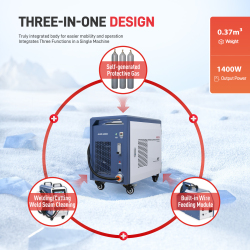
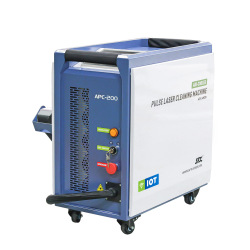
- Handheld laser cleaning machines – Portable, flexible, ideal for on‑site rust removal, maintenance, and irregular surfaces. SFX provides compact, mobile units with handheld scanning heads.
- Cabinet / workstation systems – Enclosed cleaning stations with fixed optics or robotic handling, optimized for repetitive parts and high consistency.
- Custom integrated solutions – Tailored systems combined with conveyors, robots, or automated fixtures for large‑scale production environments.
When comparing brands, ensure the mechanical design, cable length, and head weight are appropriate for your operators and working environment.
11. Safety Design and Environmental Considerations
Laser cleaning systems must comply with industrial safety standards. Important factors include:
- Laser safety class – Most industrial fiber laser cleaners are Class 4, requiring proper shielding and protective measures.
- Protective housings and shields – Especially for automated or enclosed systems.
- Interlocks – Automatic shutdown when doors are opened or covers are removed.
- Emergency stop buttons – At accessible locations on the machine and handheld heads.
- Fume extraction – Effective dust and smoke collection to protect operators and maintain a clean environment.
SFX industrial laser cleaning machines are engineered with comprehensive safety features to meet demanding factory requirements.
12. Energy Efficiency and Operating Costs
While initial purchase price is important, operating costs often matter more over the lifetime of the system. Key aspects include:
- Electrical efficiency – Fiber lasers are known for high wall‑plug efficiency, reducing energy consumption.
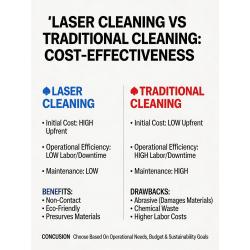
- Consumables – Laser cleaning usually requires no abrasives or chemicals, drastically lowering consumable costs compared with sandblasting or chemical cleaning.
- Maintenance intervals – Check the recommended service schedule, typical lifetime of laser source and optics, and availability of spare parts.
SFX Laser systems are designed for low maintenance and long life, offering an attractive total cost of ownership for industrial users.
13. Application‑Specific Performance
Finally, evaluate how well a particular machine matches your actual cleaning tasks. Important application‑level criteria include:
- Supported materials – Steel, aluminum, stainless steel, copper, molds, stone, and composite materials.
- Contamination types – Rust, paint, oils, oxides, coatings, residues.
- Required surface quality – Pre‑welding cleaning, pre‑coating preparation, or cosmetic surface finishing.
- Cleaning speed – Square meters per hour at specified contamination thickness.
The application examples and case studies provided by SFX Laser are a useful reference for matching machine specifications to real‑world industrial needs.
How to Compare Industrial Laser Cleaning Machines Effectively
When shortlisting suppliers and models, use the following checklist:
- Confirm the laser type, wavelength, and power required for your material and contamination.
- Check whether the system is pulsed fiber or CW and whether pulse parameters are adjustable.
- Compare pulse energy, pulse width, and repetition rate ranges.
- Evaluate beam quality, spot size, scanning width, and scanning speed.
- Review cooling design, duty cycle, and expected lifetime of the laser source.
- Assess user interface, automation readiness, and ease of operation.
- Match machine configuration (handheld vs. integrated) to your workflow.
- Verify safety systems, certifications, and environmental controls.
- Estimate operating costs, including power consumption, maintenance, and downtime.
- Request application tests or sample cleaning from the supplier to validate real performance.
Conclusion
Selecting the right industrial laser cleaning machine is about much more than choosing a wattage. By carefully comparing key technical specifications—laser type and wavelength, power, pulse parameters, beam delivery, scanning system, cooling, safety, and automation features—you can ensure that your investment delivers the cleaning quality, productivity, and reliability your operation demands.
SFX Laser offers a complete portfolio of fiber laser cleaning solutions, from compact handheld units to high‑power, fully integrated systems. Understanding the specifications outlined above will help you choose the SFX model that best fits your materials, contamination types, and production goals.

Leave A Comment